After the murder of Frankie Wallace, a dangerous chill prevailed in the underworld. Although things were quiet, observers expected a gang war to break out at any time.
“There will be no gang shootings in my division,” proclaimed the police chief at Back Bay. Police with an eye on the gangs noted no one, Italian or Irish, was in his usual haunts. The police assumed a major battle was brewing, and at one point, squad cars carrying men with riot guns and tear gas drove by Gustin hideouts.
Only those detectives following organized crime even knew Lombardo by reputation. The regular police claimed they were ignorant of the Mafia—even though many of the tobacco stores, grocery stores, funeral parlors and other businesses were gambling fronts. The locals had erected a wall of silence, as firm as the bricks and mortar composing the tenements of the North End.
“When I was a kid, we all knew what a big time crook was, and most of us looked up to them,” said North End thief Jimmy Costa, as an adult. “The racket guys would drive up in a big touring car with pretty girls and pay kids five bucks just to watch the car while he ate, as Costa recalled. “Jesus, five bucks was almost as much as my father made in a week.”
Subsequently, headquarters ordered all Italian patrolmen to go undercover and no longer report to directly to their stations. The police also hid the witnesses—although the various gang members already knew their identities. Miss Franklin was moved to a hotel under guard, while another witness was forced to reside at the Charles Street jail on the technical charge of being idle and disorderly.
Faced with a dilemma, authorities appointed the seasoned, capable and thuggish Captain William Livingstone to smash Boston’s organized crime—or at least send it to some other metropolis. In the following days after the so-called “Battle of Hanover Street,” police managed to round up at least some suspects. They booked Tony Canadian as a “suspicious person,” and picked up Congemi on Broadway in Chelsea. They reeled in Lombardo’s brother and business partner Pasquale and asked him where Joe was. “That’s what I’d like to know,” replied Pasquale. His ailing mother had been asking about Joe, too.
On December 23, with three patrolmen, a detective arrested Henry Noyes and 21-year-old Anthony “Little Bozo” Cortese. “Misery likes company,” noted the detective, who happened to be a hero from the late Great War. The exceptionally violent Cortese acted as Joe Lombardo’s private enforcer, and that night, happened to be carrying no less than four revolvers.
Cortese, who stared out at the world with the vacant eyes of a psychotic, refused to speak. But, with typical panache Noyes laughed at the charges. “I don’t even need a lawyer,” he boasted.
Frankie Gustin’s Sendoff On the bitterly cold day of Frankie Gustin’s funeral, 200 automobiles formed a procession to a West Roxbury cemetery. Under the eyes of 50 shotgun-wielding police, the ceremony proceeded. There was no priest, so the undertaker recited the final prayers, while Frankie’s mother and sister wept openly. The police just watched when Gustins beat three pesky newspaper photographers snapping pictures.
Once more, the police flung themselves on both gangs, and at one point, arrested 12 Gustin henchmen. Armed with a sledgehammer, authorities smashed in the door at the Back Bay Athletic Club, a speakeasy on Massachusetts Avenue: No Lombardo. Christmas mail poured into the empty Hanover Street headquarters, with nobody to open it. The only remaining trace of the suspect was his sedan, now abandoned in a garage, with a bloody back seat. Although he remained invisible and shy, Lombardo periodically telephoned the police to play at negotiating surrender.
Then, at Lombardo’s wife’s invitation, the police visited the couple’s Chelsea apartment on Broadway. Mrs. Lombardo said they barely had missed her husband, who just completed a Christmas visit. The police discovered Lombardo had frequented his apartment regularly, taking an established “roof route” that allowed him to avoid surveillance. While there, the police located books and diaries containing names, addresses, and telephone numbers.
Lombardo hadn’t fled Boston, but, with a bodyguard, had been navigating Chelsea, Revere, and Everett, in taxis. The role of “Mrs. Lombardo” was unclear (Lombardo may never have officially married her). Those who knew her said she was soft spoken, with a faint Italian accent, and well dressed. But it’s hard to imagine she would have done anything without consulting Lombardo himself.
As December closed, Lombardo gunmen swept through the stores and cafes of the North End explaining to their proprietors “talking out of turn isn’t healthy.” They also demanded contributions to a “gangster defense fund.”
Lomardo’s Arrest
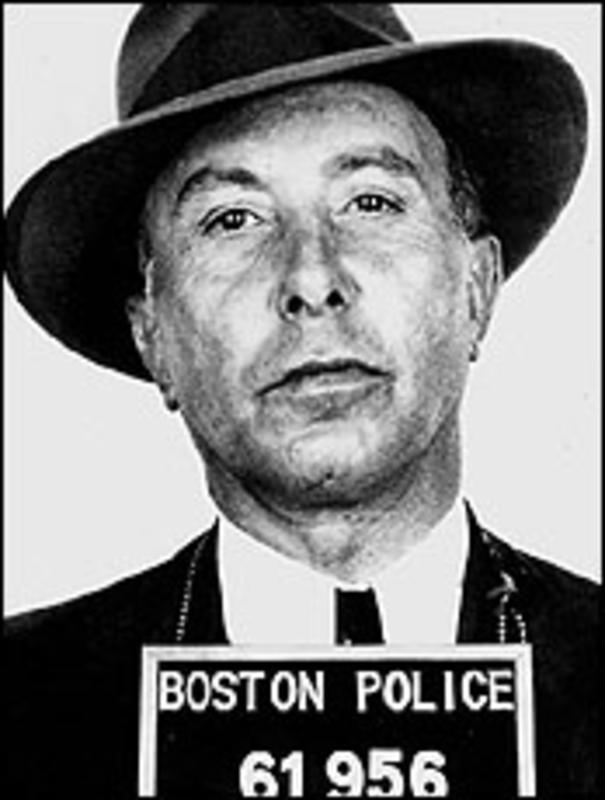
Some said Lombardo was superstitious and wanted the bad luck of an arrest to be left in 1931, and not carried into 1932. Whatever his motives, on the afternoon of December 30, Lombardo, with a bodyguard, exited a car in broad daylight in downtown Boston. Lombardo wore a dark suit, tight-fitting overcoat, and a gray hat, his shoes shone brightly. His bodyguard was anonymous, wearing a topcoat that reached to his knees, with the collar up, and a fedora covered his face. One hand remained in the topcoat’s pocket. Lombardo walked down Stuart Street, hands in his pockets, crossed the street to the police headquarters, and ascended the five steps to the entrance.
“So long, Joe, see you later,” said the bodyguard, who quickly vanished, leaving the most wanted man in Boston to enter the headquarters alone. Lombardo climbed another five steps to a desk, where a large rugged officer sat at a desk reading a newspaper.
“I’d like to see superintendent Crowley,” Lombardo said, and then identified himself. No one had yet recognized him.
The officer’s big face turned red before going pale. “So you’re Joe Lombardi, eh?” He stood up and ushered the Italian into the office beyond, touching his elbow slightly. “Super, there’s someone to see you,” he announced, according to one account. Inside, Crowley swung around in his swivel chair and told Lombardo to sit, and that he was glad he’d come in.
“Make yourself comfortable,” Crowley commanded, and his assistant entered the room to start the questioning ritual. In response, Lombardo only offered a smile—which never left his face for the rest of the interrogation—and a brief, gentle reply: “I don’t want to be saucy, but I can’t answer any questions upon advice of my counsel.”
The next day, Cucchiara and Congemi also surrendered quietly at police headquarters. The police measured, photographed, and questioned both men. In near unison, they stated: “We’re saying nothing on advice of counsel.” The three Mafia associates spent New Year’s Day in adjoining cells. On January 2, the slight Lombardo, thick Cucchiara, and small, swarthy Congemi stood before a judge, who sent the trio to the “tombs.” This aptly named facility contained Suffolk County’s dungeon-like holding cells.
While Lombardo was the Commonwealth’s guest, a doctor examined him and found him shockingly, even scandalously bourgeois. “His cultural and social interest is on a middle class level,” wrote the doctor. “Intellectual status is fully up to average. Conversation and appearance that of a fairly well-educated man. Adopts himself to his present situation without emotional stress. Friendly and of excellent poise.”
Mafia Cleared In Court Then, on January 11, seven men—including Congemi, Lombardo, Noyes, Cortese, Coffey and Cucchiara—all appeared in court, handcuffed in locked docks like animals in a zoo. Investigators had seized bullet cartridges at Cucchiara’s house that matched a rare and powerful type of foreign-made shell found in the Testa building—only one store, a Hanover Street music shop, sold them.
Yet, despite all the circumstantial evidence, the state’s case was actually quite weak. For one thing, witness McCoole couldn’t put Lombardo and his associates in the room at the time of the shooting. The other witnesses either said nothing or not enough. On the 13, the judge ordered everyone freed except Cucchiara, Congemi and Lombardo.
On March 20, the Suffolk County grand jury convened: Lombardo appeared nervous, flushed to the roots of his hair. One North End witness proved useless, except as entertainment, given he had a fistfight with a neighbor in the courtroom. Coffey took the stand, but only repeated his address and name. The case ended there, and the judge ordered Lombardo and his associates freed. Handcuffs removed, Lombardo now smiled and relaxed enough to chat with his lawyer.
Clearly, the plotters had accurately worked out the mathematics required to kill two Irishmen with some 17 bullets, dispose of seven pistols, and have six Italians left over, alive and free of the law’s penalty. With one bold move, Lombardo had eliminated an Irish rival–just as Capone had gunned down Irish rivals such as Dion O’Banion in Chicago. Without their clever chief, the Gustins could no longer dictate terms about how these Wops operated their franchise—indeed, no one group could. The Boston Mafia, previously a puny secret society that thrived on the kidnap, extortion and murder of fellow Italians, had just been re-baptized in blood and fire.
 thebostonmobbymarcsongini