The grim stretch of greater Boston-area history, generally reckoned as running from June 14, 1962, to January 4, 1964, has an oddly personal meaning for me. After all, I lived just down the street from the prime suspect, Albert Henry DeSalvo, for years. Back in the 1970s, I was a resident in bucolic but decaying East Walpole, while DeSalvo was a non-paying tenant at Cedar Junction MCI Walpole, just a few miles away. I remember waking up on the morning of November 25, 1973, when the radio announced DeSalvo had been stabbed to death.
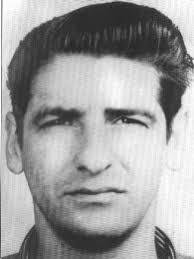
Albert DeSalvo
I had no idea who he was or what he meant. But there was something creepy about the name: “Boston Strangler.” It sounded so flat and dismal. Then of course there were the stories from my mother and aunt. They’d been living in dirty, corrupt poor Boston at the time. They could remember how you couldn’t buy a dog or a lock when the reign of fear of the strangler prevailed. No woman wanted to let someone in her apartment.
Private Nightmare Journey
Then many years later, I wrote a chapter about the Strangler for a small paperback book about New England’s more notorious murders. For my research, I reviewed the existing Strangler literature and the various arguments pro and con about DeSalvo’s guilt.
Some aspects of the killings got to me — in particular, the weird intimacy of the Strangler with his victims (like a vampire’s). That semi erotic aspect to the crimes got under my skin like a tick. One must get very close to asphyxiate someone. And then there was the variety and voracity of the killer: He didn’t discriminate by anything except gender. He took protestants and Catholics alike, old and young women, ugly and pretty. They were mostly white women, but he also murdered a lovely young black lady. Some he sexually assaulted. Others not. Some he abused with what appeared to be a perverse sense of humor.
Underworld Confessions
A number of people I personally have known have had various types of direct connections to the Strangler, as I mentioned. One of them was a key source for my book “The Boston Mob,” a man we’ll call by his street name, “The Undertaker.” This felon, himself a killer, claimed to me back around 2010 that he knew who the Strangler actually was and that said Strangler was still alive. The Undertaker was in a position to know such things, as he’d been in jail (primarily MCI-Cedar Junction) since the mid 1960s for murder committed during a grocery store holdup.

Of course, the Undertaker couldn’t divulge the Strangler’s name. After all, the Undertaker may have been a cop killer and a drug abuser and hit man, but he wasn’t a snitch. As the Undertaker is now (sadly, I did develop a writer-source bond) gone, I have no idea to whom he referred.
Literary and Semi-Literary Treatments
Now back to business. As I begin to explore the subject, I’d like to look at some of the major literary and media accounts of his (their) nefarious career. We’ll start with a brief overview here, and then get more in-depth. For those with an interest in the subject, these treatments are the starting point.
“The Boston Strangler.” This is the first and possibly the best of the Strangler treatments. In fact, with clear, precise writing and sense of place and time, this is one of the better books about New England crime I’ve ever read. Frank offers a certain context about Boston (noting it had banned the racy masterpiece “Lolita”), a city very much the product and victim of Irish Catholic and puritan guilt. A mark (possibly) against author Gerold Frank was that he wrote the book in cooperation with DeSalvo’s one-time attorney, F. Lee Bailey. Based on DeSalvo’s confessions, which are of questionable merit, the book’s point of view doesn’t consider there could be any other credible murderer. (This helped solidify the notion that DeSalvo was the lone killer, and was the basis for the movie of the same name, starring Tony Curtis.)
“The Boston Stranglers: The Public Conviction of Albert Desalvo and the True Story of Eleven Shocking Murders.” This contrarian tome was published in 1995 by Susan Kelly, some 30 years after Frank’s book. It drew heavily on input from the Cambridge Police Department, who were the manhunting rivals of the other police departments during the manhunt. Ultimately, Kelly’s book largely says the crime spree’s author was anybody BUT DeSalvo. Kelly also relied on FBI serial killer orthodox dogma, which dictates that serial killers only have a single M.O. By this approach, given the Strangler’s victims were so very different in race, type age, creed, etc., there must have been a variety of killers. This is as restricting a theory as is the notion that DeSalvo could have been the only killer. (We can only say definitively he was one of the strangling killers.)
“A Rose for Mary: The Hunt for the Real Boston Strangler.” This book by onetime TV journalist and amateur sleuth Casey Sherman is a strange outlier, as it is a first person narrative by someone who had no direct connection with the actual stranglings. Casey’s interest derives from the last Strangler killing: That of his maternal aunt Mary Sullivan, who died at the tragically young age of 19. This combined rape-murder in January 1964 had a peculiarly gruesome twist: The killer left three ligatures around the victim’s neck; placed a broom handle inside her; and put a greeting card by her naked left foot, stating: “Happy New Year.”
Growing up with stories of his aunt, Sherman himself turned into an investigator, spending 10 years second-guessing the original manhunt. There was, of course, the deep state conspiracy to block his progress; the friendly inside sources; the aha moments, and so on.
This quest led Sherman to a man he thought was his aunt’s murderer: a wretch “guarded twenty-four hours a day by a conscience that would not let him forget.” ( I think he meant to say “oppressed” and not “guarded”). It turned out that the man he accused (on a New Hampshire golf course, while Sherman was in disguise) wasn’t the killer: DNA proved it was DeSalvo, who had confessed already decades before. Although its major premise turned out to be incorrect, in writing this book, Sherman did succeed in creating a sort of shrine to someone who died, sadly, before she ever really had a chance to live.
“Stranglers,” podcast hosted by Portland Helmich. This outstanding podcast reexamines and freshens much of the evidence. The producers also reviewed the original testimonies, profiles some of the early suspects, and even offers interviews with surviving eyewitnesses to the strangling period. and testiony and talked to people related to the killings and investigations. Interestingly, it also features the actual voice Albert DeSalvo ,from his interviews with John Bottomly, the head of the ad hoc Strangler Bureau. (A key figure on the law enforcement side, Bottomly, depending on your point of view, either botched the investigation or brought it to a successful conclusion by hanging it on DeSalvo.)
Strangely, although a murderer, thief, and serial rapist, DeSalvo’s voice is uncommonly soft and gentle. It is at least understandable how he could talk his way into so many women’s domiciles and (in some cases) beds willingly. In any case, he was a master con-man, and between his boyish charm and voice (and not entirely unattractive appearance), he had considerable advantages with his unwilling victims, as well .
With this, I end my brief introduction. In future posts, I’ll examine the points of view on DeSalvo from his criminal confederates, including jewel thief William “Floppy” Fopiano; Joe “The Animal” Barboza, a mafia enforcer; and murderer and conman William Geraway. And there will be even more…
 thebostonmobbymarcsongini